William Guillon: Mythologies and Creative Freedom
William Guillon is an artist, sculptor and art director. Combining artisanal craftsmanship with an extraordinary imaginative force, this creative mind has forged a recognisable visual language and a coherent universe in which each piece plays a role, like a character from a science-fiction myth. Artists with such a strong identity are rare. It is therefore easy to embrace or reject his world. But once appreciated, it proves endlessly compelling. William Guillon is the kind of artist who can provoke a true collector’s obsession. So take note: either surrender to it, or run while you still can.
An Outsider in the Creative Landscape
Despite years at the helm of his studio, a presence in galleries around the world, and acclaimed appearances at some of the most prestigious professional gatherings, William Guillon remains haunted by a persistent impostor syndrome. He learned everything in the field, developed his own techniques, and conquered markets without following the traditional path of a craft school education. As a result, at major fine craft fairs, he feels like an unidentifiable outsider.
Deeply interested in contemporary artistic and craft creation, William admires technical feats and the virtuosity of craftsmanship. In the work of artists and artisans, he recognizes a remarkable ability to surpass themselves, to push their research on materials and modes of creative expression to the extreme, to go further than their masters and peers. Yet these works are rarely imbued with genuine emotional intensity.
This stands in stark contrast to William’s creative universe. When designing his pieces, his primary aim is to create an impact — to spark emotion, to convey a feeling or a perspective on the world. Aware of his distinct position within the craft scene, he does not hesitate to exhibit at such gatherings, while maintaining a discreet, independent presence on the sidelines.
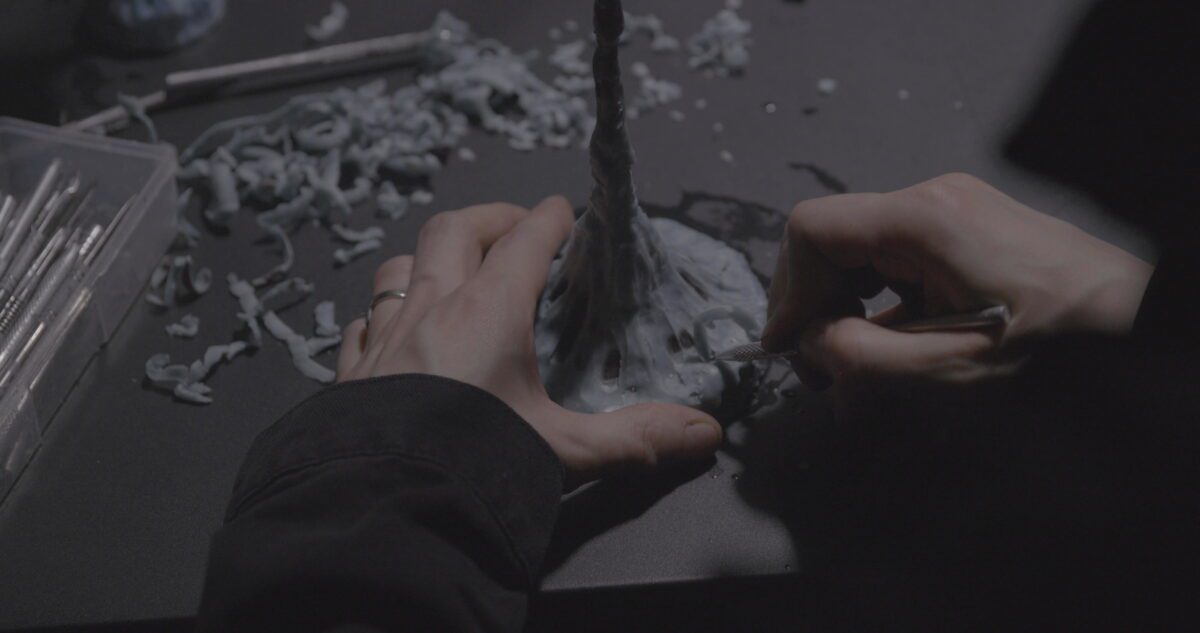
His ego does not reside in his technical skill. As a self-taught artist, he gladly listens to professional advice, knowing he does much in his own way. His method of working wax for moulds can be somewhat haphazard, his gestures imperfect, yet he invests them with heart and feeling. As a result, his universe resonates.
Sources
William Guillon draws inspiration from cinema, architecture and installations. He is searching for a sensation. Music contributes, as does the slender silhouette of a church. For fifteen years, the artist has passed at least twice a day before the vast Saint-André Cathedral in Bordeaux. The majestic building never ceases to move him. He observes its details, always finding an element that had escaped his eye. He traces the directions of the vaults, the lines stretching towards the sky, and admires the gargoyles.
In films, he is drawn to close-ups of textures and landscapes. He also delights in the misty lighting of contemporary installations and has a passion for album covers. He would never copy their imagery, but he absorbs their energy and intention, which resonate with his imagination and work.
At the beginning of his artistic journey, the universe of Swiss artist Hans Ruedi Giger had a powerful impact on him. He was drawn to organic forms, neon lights and science fiction. Above all, he loved the idea of sharing a universe with others, of identifying with an imaginary world and bringing together people who share the same tastes. At the time, it was a niche phenomenon. In a sense, the Swiss artist showed him the way. Other influences came from films, music and books. He developed an obsession with Brutalism and Art Nouveau. In fashion, he felt close to designers such as Rick Owens and Yohji Yamamoto, whose dark, organic forms he admired. Finding nothing similar in functional design, he decided to bring his own vision into that field.
GARDEZ UN OEIL SUR L’ACTUALITÉ, RECEVEZ NOTRE NEWSLETTER
The Energy of the Works
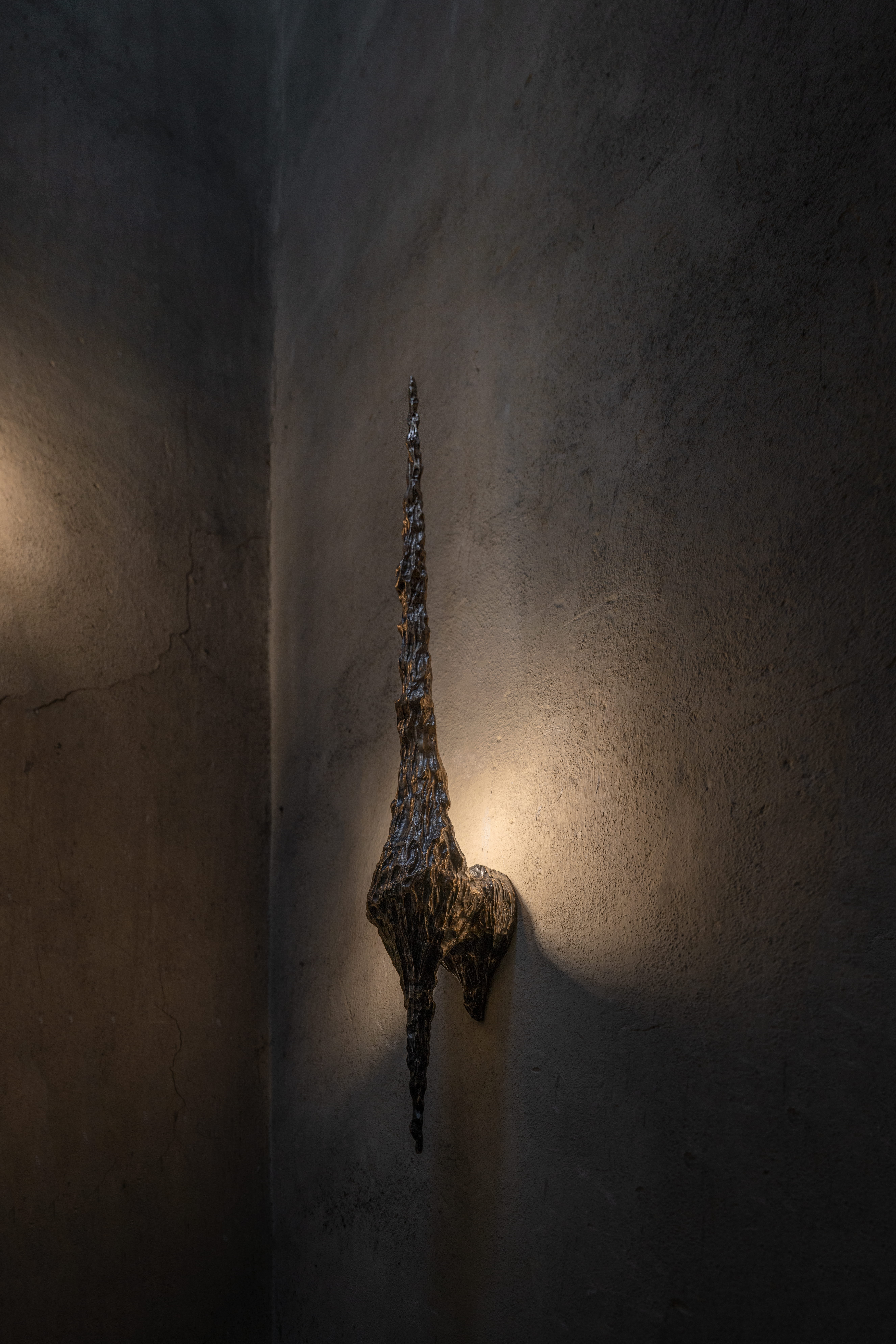
William Guillon’s works are always elongated, reaching upwards. The artist abhors softness. He hollows, stretches and creates tension. One has the impression that the material, under strain, could shatter. He likes to say his creations are entirely stripped of fat.
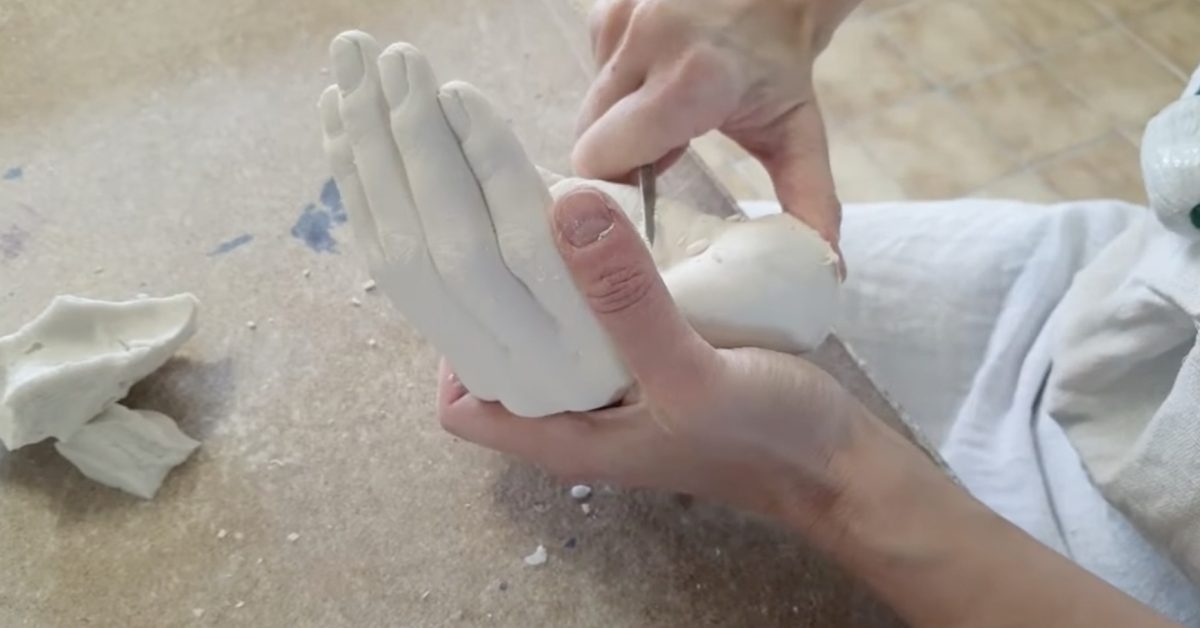
These skeletal, twisted lines are partly inspired by his mother’s hands. Since the age of nineteen, she has lived with rheumatoid arthritis, which continually deforms her joints, with remarkable resilience and courage. This transformation has haunted William since childhood. He sees her hands whenever he draws. More broadly, joints are ever-present in his work.
One might expect dark, dramatic undertones from this compassion for his mother’s pain. Instead, William draws from her strength, her thirst for light and joy despite the constant inflammation. She raised three children while working tirelessly, never indulging in self-pity. This pain transformed into a smile, this suffering expressed as an affirmation of life, deeply influences William’s imagination and gives his bronze creations a positive emotional charge.
The Journey
It all began in his grandfather’s garage. A former Air Force navigator and a true jack-of-all-trades, he introduced William to working with metal. His uncle, who built steel-frame workshops, offered the young creator an exciting playground within his own studio. William used leftover metal scraps to shape his first pieces and to understand the material through practice.
He was drawn to heavy, substantial elements — nuts and rivets — assembling them into organic forms. He began with bookends; lamps and pedestal tables soon followed, quickly finding buyers among family and friends. This is how he was initiated into metalwork, discovering a deep and lasting passion for the material.
At sixteen, William Guillon embarked on active creation. He began drawing, making sculptures and collages. They filled his bedroom. In a single day, he became an artist, and it never stopped. Art and fashion particularly fascinated him. These two passions led him to study art direction and graphic design in Bordeaux.
In his fourth year, he discovered the studio of Marine Breynaert. This collaboration taught him a great deal, especially about client expectations and distribution networks, both essential to an artist’s longevity.
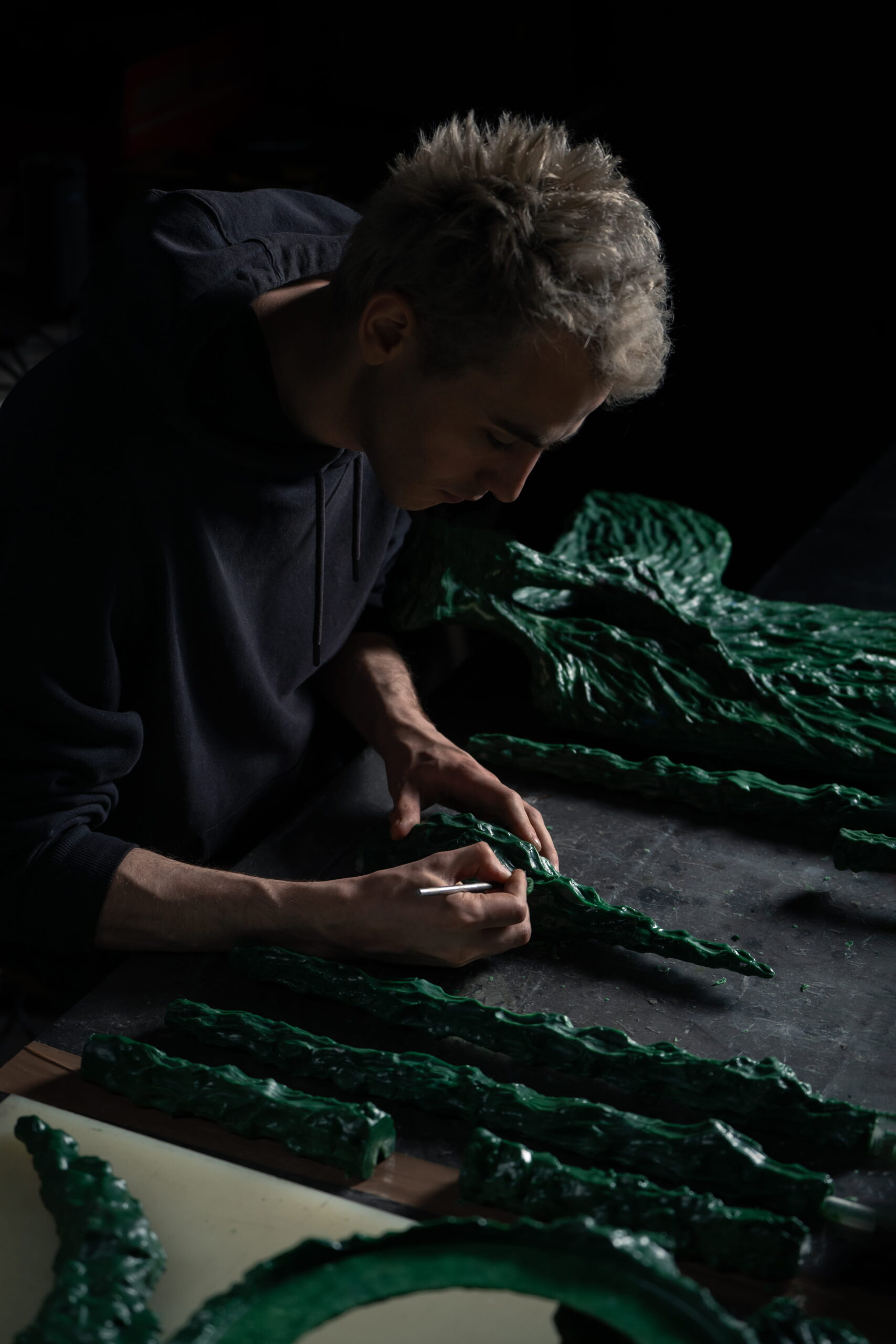
William Guillon is fearless. Diploma in hand, he set up his own studio without hesitation. Success did not come immediately, yet he persisted. To make ends meet, he took on odd jobs, which often helped him move forward with his artistic project. One of these temporary positions led him to the Cyclopes foundry near Bordeaux. He left with wax that opened a new creative perspective: sculpting pieces from his imagination and casting them in bronze. From the outset, his talent won the support of galleries. His first sculpted bronze creations were pre-ordered by Galerie PHILIA. Trusting the young creator, galleries bought pieces from drawings, allowing him to embark on the adventure that has since become his studio’s signature.
A Beloved Material
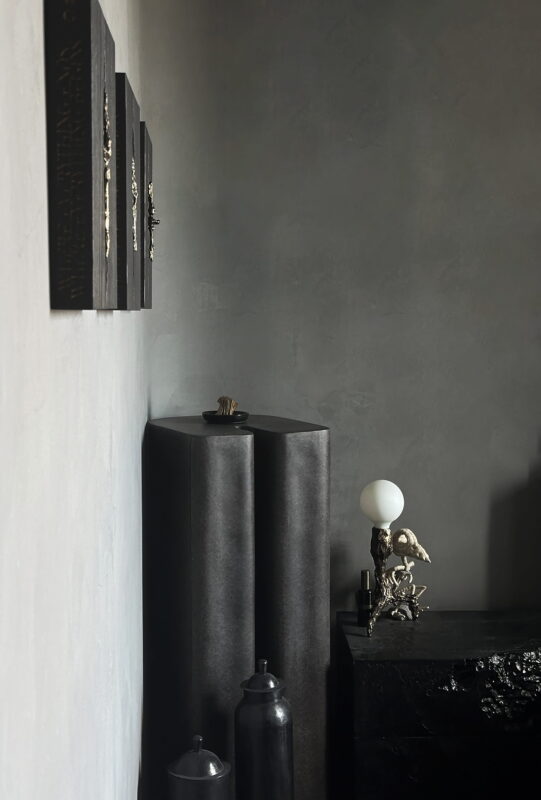
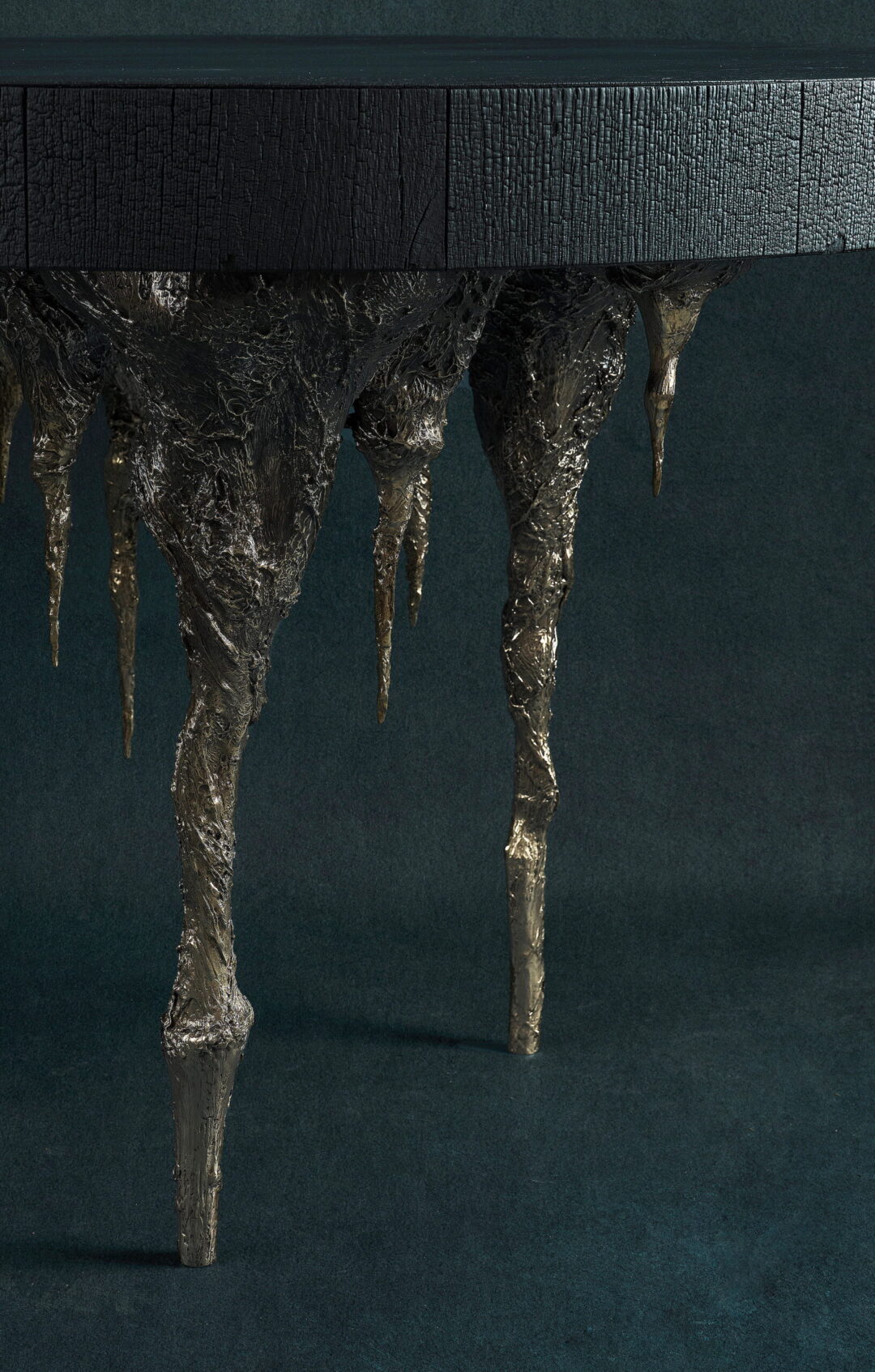
William Guillon works mainly with white and gilded bronze. Here again, he grants himself the freedom to take risks: white bronze is extremely difficult to handle. It welds poorly and can break. The artist loves the effect it produces and has learned to master it over time.
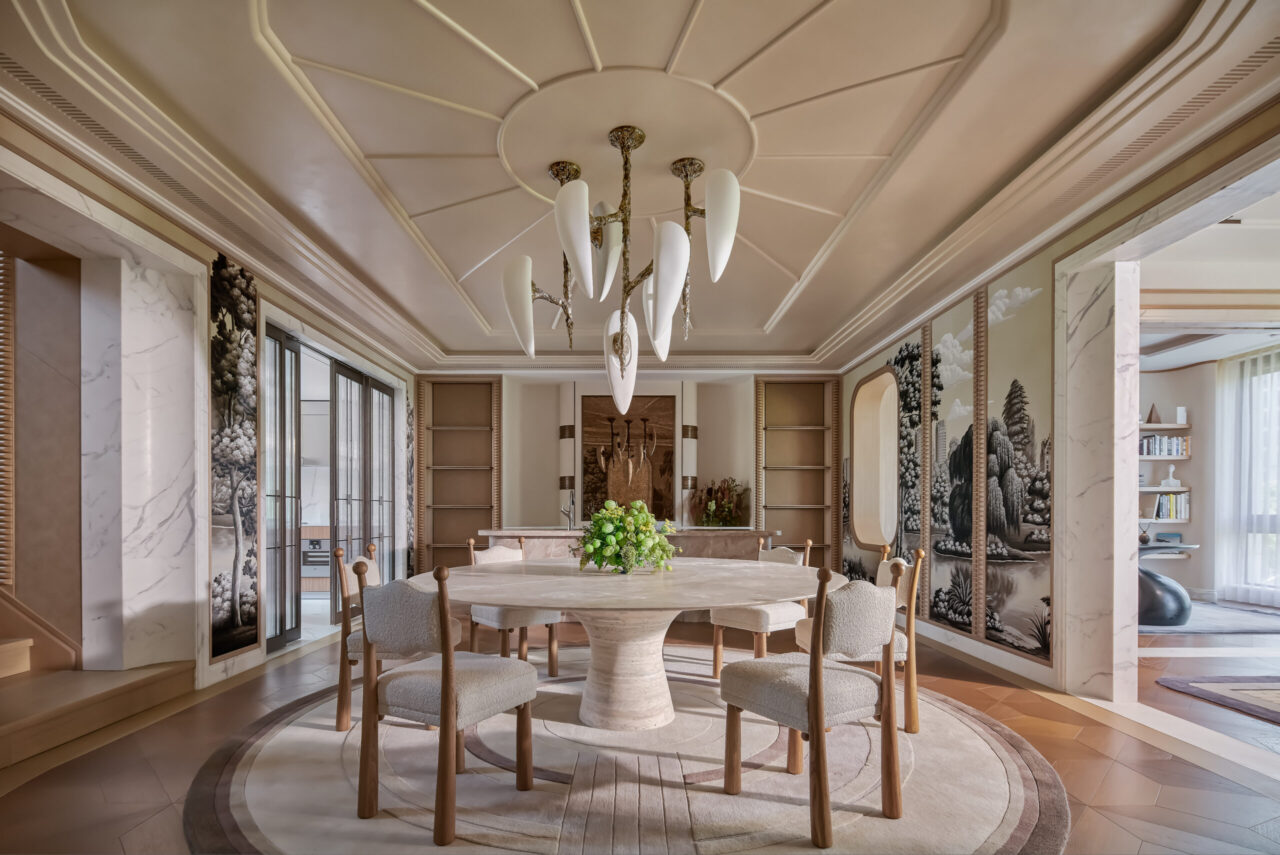
The first bronze collection he developed was destined for the hotel Yndo in Bordeaux. The project was complex and time-consuming. Since then, with the unwavering support of the hotel’s owner, he has produced several pieces for the establishment. This prestigious collaboration launched his career.
Creative Process
William Guillon began his professional life in the midst of the subprime crisis. The capitalist model was once again in turmoil, and the media painted a bleak picture of the future. This atmosphere influenced his reflections on the aesthetics of the era and the traces it would leave for future generations. He called it the “aesthetics of crisis”. Every major period can be recognised by its style: one only needs to think of the distinct currents of the 1930s, 1950s or 1970s.
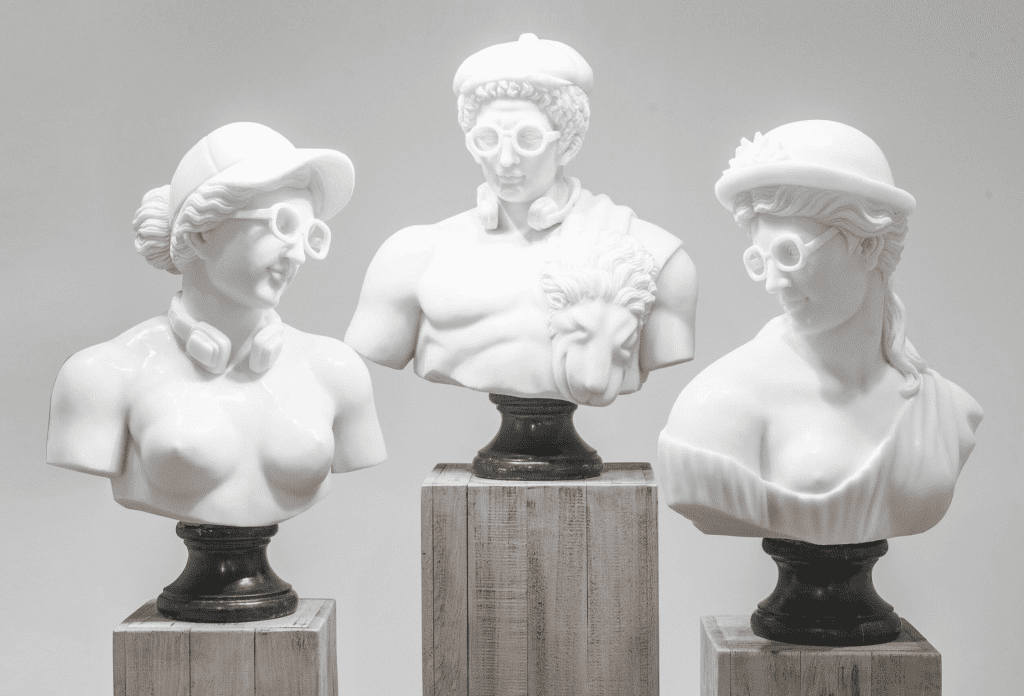
Rejecting the concept of collections, he speaks instead of “mythologies”. His pieces have strong personalities. They are characters in the stories he tells.
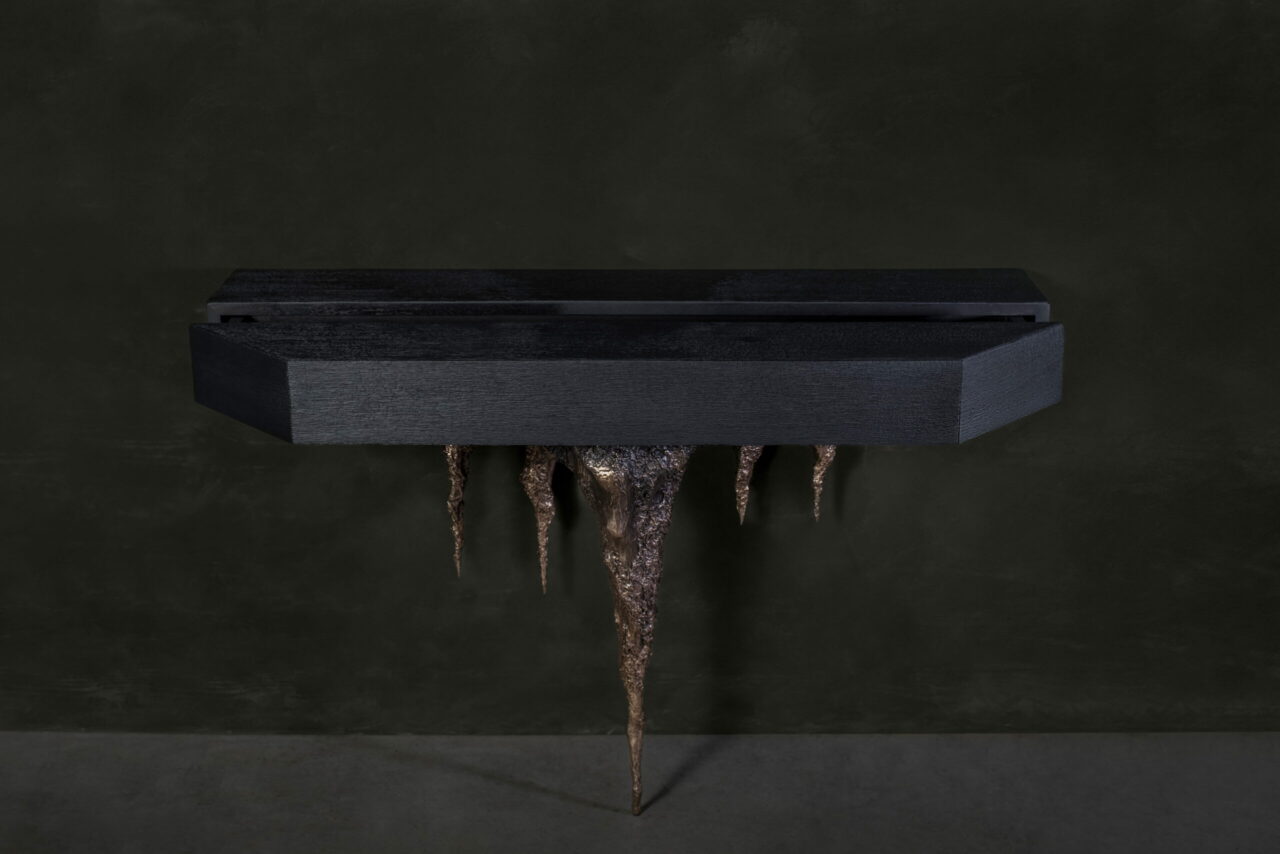
His creative process always begins with writing. He composes stories that give birth to pieces with their own universe. He imagines them as members of a particular imaginary family. He invents the rules—sometimes even physical ones—that govern their existence. In the Désenchantés family, for instance, every piece plays with gravity, its tips turned downward.
Music has a major influence on his work. It is omnipresent in his life: enveloping, recharging, inspiring him. Surprisingly, a techno night can be the best place for a flood of ideas. Suddenly, in the midst of the noise, everything becomes clear. Anxiety and doubt give way to creation.
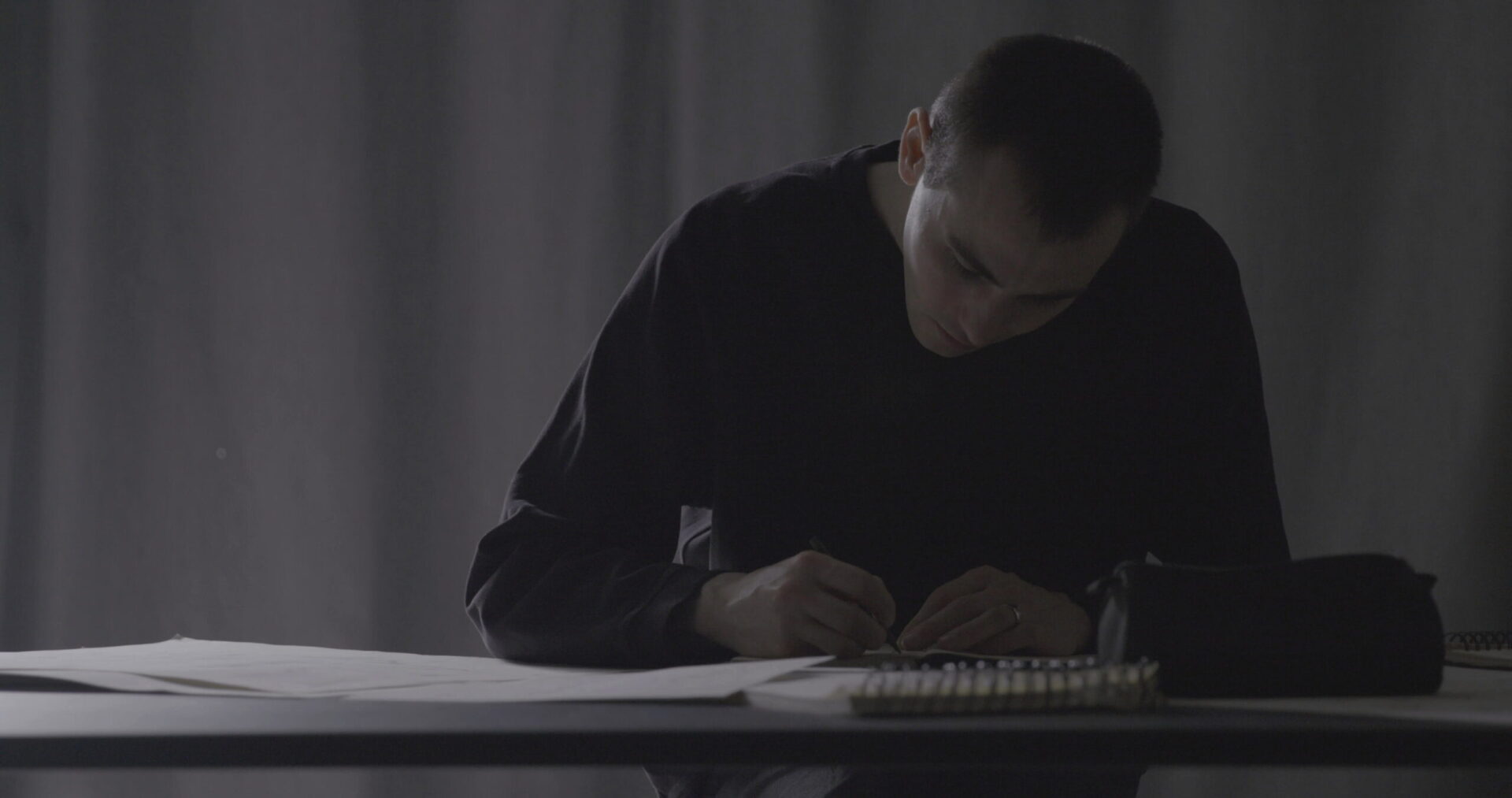
Unlike many artists, William does not draw constantly. He thinks, imagines and builds images in his mind. His brain never stops: ideas come while driving or sitting on a train. It is when he does nothing that his mind sculpts new forms. At a certain point, he feels the idea is sufficiently developed. Only then does he take his sketchbook and begin to draw. He knows exactly where he is going. For one mythology, he may produce forty-five sketches, not two hundred thousand. This was the case for the LV 426 collection, one of his most widely distributed bodies of work.
He also draws for pleasure. From these intuitive sketches emerge forms that surprise him and seem interesting enough to explore as functional objects. With practice, his style has asserted itself, and he no longer draws entirely at random. Yet sometimes the outlines appear from nowhere, like a revelation. William Guillon’s imagination is abundant, and his creations always provoke a strong emotional response, whether positive or negative. Indifference is rare.
Transmission
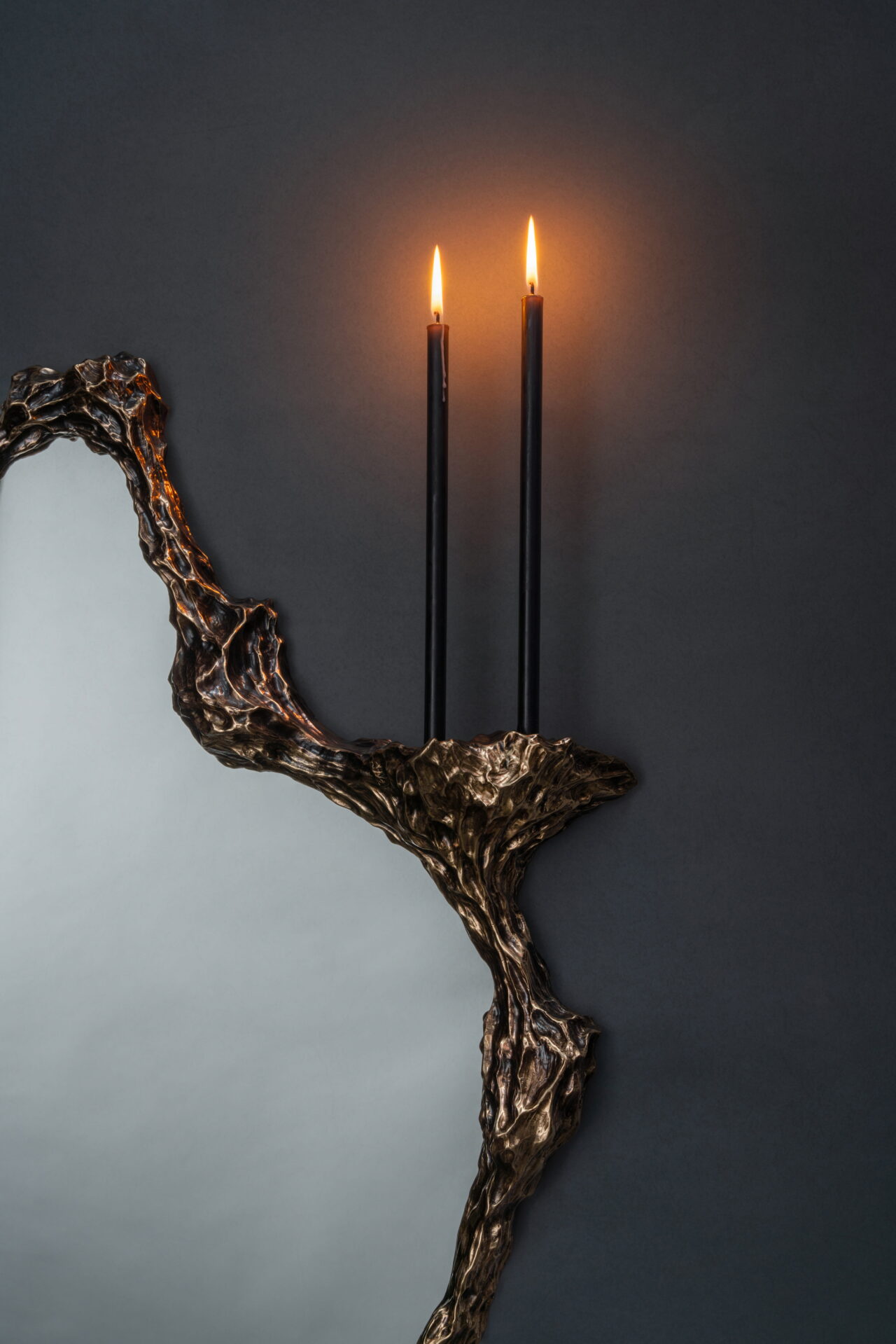
William Guillon sometimes wonders how people a century from now will perceive his work. Some connoisseurs say his bronze pieces carry a taste of the end of the world. He finds this quite accurate, as his creations bear witness to a certain unease and resilience. Above all, however, they express hope. They possess an inner strength that allows them to endure, to stretch towards the light. There is neither defeat nor sadness in the objects he creates. One could say that his work breathes confidence in the future.
Thinking about that future, the artist is expanding his studio and surrounding himself with talent. His team now counts six people with complementary skills and shared energy, united to respond to numerous commissions and conceive new pieces, always driven by innovation and storytelling.
William Guillon remains conscious of his self-taught path. Despite success and recognition, he still struggles with impostor syndrome. The feeling intensifies when he receives apprentices or visits from seasoned craftsmen, far more technically knowledgeable than he is.
Fashion
William Guillon has a deep passion for fashion. He is fascinated by its ability to occupy—almost invade—so many areas of human life. Fashion touches countless aspects of our daily existence. Today’s creative director is a true visionary, a conductor who must think not only about design, but also about video, shows and many other facets of the business. William loves this tentacular quality. It is like an architect designing a house down to the smallest detail, even the cutlery.
Fashion differs greatly from architecture or design: it moves far faster. Yet perhaps, in this hyper-productivity, it has lost some of its quality. William hopes fashion will slow down, and that we might once again create less, but better. To take part in it is his dream. We are certain it will come true, offering him another opportunity to leave his creative mark.
Photos Credits: Studio Furax7, Nicolas Seurot, Maison Mouton Noir, Studio Brinth, William Guillon
- William Guillon: Mythologies and Creative Freedom

- Lucile Vilaine — In Praise of the Feather, Close to Nature
- Laura Demichelis – Bronze Artist, Craftswoman, Innovator
- Ryo Hikosaka. From Tokyo to Paris: Metal as Language, Patina as Artistic Identity
- Felt in Full Glory: The Contemporary World of Aurélia Westray

RECEVEZ NOTRE NEWSLETTER